Author - Trainer, Kah May Yong
Starting school is a big step for any child – but for young children who are learning English as an Additional Language (EAL), this transition can come with extra challenges and opportunities. For international early years settings aiming to create inclusive, welcoming environments, it’s vital to think holistically about settling, communicating with, and assessing young multilingual learners so that they feel secure, understood, and ready to thrive.
In EAL in Early Years Settings: Guidance and Strategies, The Bell Foundation offers practical principles and pedagogical approaches to support early years practitioners in doing just this. At the heart of this guidance is the belief that every child’s multilingualism is an asset, and that carefully supported early engagement with language lays the foundation for confident learning across the early year's curriculum.
1. Create a welcoming environment
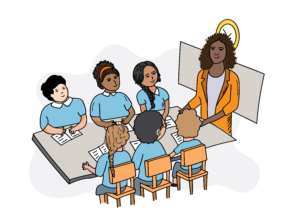 First impressions matter. For newly arrived EAL learners, meaningful settling begins the moment they enter your setting:
- Build trusting relationships: Make time to greet children warmly and create space for them to communicate in ways that feel comfortable – through gesture, play, and familiar language.
- Familiar environments: Where possible, let children explore and interact with familiar resources and routines before formal assessment begins. This helps reduce anxiety and gives a more accurate picture of how they naturally communicate.
- Informal observation from day one: While formal assessment should wait until children have had a chance to settle, ongoing observation supports early insights into how a child uses language socially and in play.
2. Know when and how to use the EAL Assessment Framework
Although The Bell Foundation’s EAL Assessment Framework was primarily developed for primary (and secondary) settings, it is highly adaptable for Early Years settings as well. It provides a structured way to understand a child’s proficiency in English.
It uses five proficiency bands with descriptors that help practitioners to:
- Understand what a young EAL learner can do at their current stage using the speaking and listening descriptors.
- Identify where targeted support might help next steps.
- Track growth over time, even when progress is non‑linear or subtle.
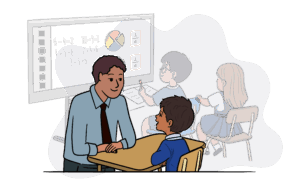
When integrating this with EYFS assessment:
- Use the Framework descriptors alongside EYFS Communication and Language goals to make a “best‑fit” judgement of English proficiency.
- Ensure assessment is ongoing and holistic. Observation in play, routines, and social interaction often reveals more than isolated tasks.
Remember that young learners may demonstrate skills in different orders or contexts – progression within bands is fluid.
3. Support language through play, interaction, and inclusion
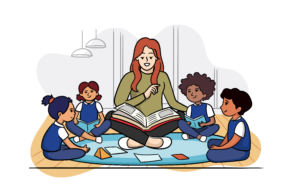 Language learning thrives on interaction, particularly in the early years.
- Play‑based learning: Give children rich opportunities to use English alongside peers within play. This builds confidence and contextual language skills far more naturally than isolated drills. For example, during a building block activity, children can describe what they are creating (“I’m making a tower”) and ask peers for materials (“can I have a red block?”), practicing language in a meaningful, interactive context.
- Use visual support and routines: Visual timetables, familiar routines and gestures help reduce cognitive load and support comprehension. For example, using picture cues and consistent gestures for snack, tidy-up, and story time helps children follow routines more independently.
- Celebrate home languages: Encouraging children to share their first languages helps them feel valued and supports cross‑linguistic connection. This might include learning key greetings from each child’s home language, inviting families to contribute dual language books, or encouraging children to teach their peers a simple word or song.
This aligns with the Guiding Principles for EAL in EYFS, which emphasise enabling environments, positive relationships, and a recognition that each child develops at their own pace.
4. Partner with families from the start
 Families are a child’s first and most enduring educators. Early communication with parents/carers can offer invaluable insights into a child’s linguistic background, preferences, routine and culture, which in turn supports smoother settling and more accurate assessment.
- Invite families to share key words from home languages. For example, parents can provide a small list of everyday words like “hello,” “thank you,” or “bathroom” in their home language, which staff can use alongside English in the classroom.
- Learn about children’s interests through their family stories. Parents might share stories about family pets, favourite foods, or weekend routines, which can then inspire play-based activities, discussion prompts, or themed displays in the classroom.
- Celebrate and reflect children’s cultures within your setting. This could include displaying children’s artwork or photos from home, holding themed cultural days, learning songs or simple greetings in home languages, or inviting families to share traditional stories or recipes.
These practices not only ease settling but also underpin long‑term engagement with learning.
5. Link assessment with support
 Assessment should inform practice, not just document it. The power of the Foundation’s EAL Assessment Framework lies in how it supports planning and tailored pedagogy. Once you understand where a young learner is in their language journey, you can:
- Target your support using strategies that match familiarity with English, e.g. pre‑teaching key vocabulary, structured language modelling, or supported group activities.
- Revisit proficiency judgements regularly as children grow in confidence and use English in new contexts.
- Use assessment to set meaningful, achievable next steps rather than labels.
In this way, assessment becomes part of a cycle of observation, reflection and responsive practice – key to effective early years provision for EAL learners.
In summary
Supporting EAL learners in international early years settings require patience, curiosity and a commitment to inclusive practice. Settling children isn’t just about helping them feel comfortable in the room – it’s about creating a culture where every child’s language and identity are seen as strengths, and where assessment helps you understand and support their emerging English alongside holistic development. By combining relational practice with thoughtful use of the EAL Assessment Framework and EYFS processes, practitioners can make the early years a gateway to success for all learners.