National Year of Reading 2026: Celebrating Reading in Multilingual Classrooms
Discover free resources, expert insights, and practical strategies from The Bell Foundation to support reading development for multilingual pupils as part of the National Year of Reading 2026.
In support of the National Year of Reading 2026, The Bell Foundation is highlighting the vital role that reading plays in the educational success, wellbeing, and inclusion of multilingual learners and sharing guidance around supporting these learners in the classroom and at home.
For pupils who use English as an Additional Language (EAL), reading in all the languages they speak is not only central to their academic attainment, but also to language development, confidence, and a sense of belonging in school. On this page, we bring together teacher advice, insights from our EAL trainers, tried-and-tested classroom ideas, high-quality teaching resources, and useful blogs focussed on how both schools and families can champion reading with multilingual children.
About the National Year of Reading 2026
The National Year of Reading 2026 is a bold and inspirational national campaign designed to rekindle a love of reading across the UK in response to the steep decline in reading for pleasure among children, young people and adults. Led by the Department for Education and delivered in partnership with the National Literacy Trust, the initiative invites everyone – schools, families, libraries, communities, and individuals – to “Go All In” on reading, recognising that reading in all its forms can deepen engagement with the things people already love and help build skills, wellbeing, and connection.
If you are you a secondary school teacher looking for literacy inspiration for multilingual classrooms, catch up on our third National Year of Reading webinar. We were joined by literacy specialists Catharine Driver, Marilena Richards, and Yamina Bibi, who addressed the challenges EAL learners face, provided examples of innovative projects, and impactful practice in school contexts.
In this webinar, our Policy and Practice Officer Glynis Lloyd welcomed Professor Sabine Little to look at the research she has collaborated on around multilingual reading. Also how the positioning of school as a monolingual or multilingual space, affects the child's ability to bring their whole plurilingual selves to their reading development.
This webinar is the launch of The Bell Foundation’s programme for multilingual learners and the National Year of Reading. We hear from The National Literacy Trust about the campaign, and from specialists in the field about their work with multilingual children and young people. Speakers share how schools can celebrate and strengthen multilingual learners’ reading in all the languages they use, to build engaged, confident, lifelong readers.
In this short video blog, educators Ciara Naughton, Sufian Sadiq, and Lewis Smith, share practical reading strategies they use to support pupils who use EAL. Drawing on their classroom experience, they offer simple, effective tips that can be applied across different school settings.
When supporting learners who are new to English with their reading we use picture books. We also accompany this with sequencing cards, and there is also lots of discussion around the picture book wherever possible. We also make sure that we encourage parents to read with the child in their home language.
Ciara Naughton
Assistant Head and Year 6 Teacher
St Bernadette's Catholic Primary School
Encouraging children to read in their home language brings significant benefits, including in supporting a positive transition into school. It helps learners to build confidence, increase engagement with learning, and enables them to express their thinking and ideas more freely. Valuing and using home languages also reinforces the child’s identity and sense of belonging, creating strong foundations for later reading in English. The video below features multilingual pupils reading in their preferred languages, highlighting the power of home-language reading in action.
I enjoy reading books in my home language as I think that it helps my understanding. I can really understand what is happening and I feel I can bond more with the characters in the book.
Year 6 pupil at St Bernadette’s Catholic Primary School






Primary resources

 This visual EAL classroom resource is based on the story by Rod Campbell. It helps learners build animal and adjective vocabulary and practise simple sentence structures through engaging flashcards, games and substitution tables, making it ideal for pupils who are new to English or in early language acquisition.
Secondary resources


 This resource involves each member of the class reading some basic information about a character from Shakespeare’s Romeo and Juliet and then introducing themselves to others as that character.
 This pack for teaching the novella The Woman in Black contains activities and tested strategies to support multilingual learners who use EAL to access the text.
 This resource supports KS 3-4 multilingual learners who are new to English as they read, comprehend and analyse the poem, The Émigrée. Part 1 includes activities that build concepts before reading and Part 2 includes activities that support comprehension and analysis during reading.
 This four-part, scaffolded GCSE poetry resource supports multilingual learners in accessing, analysing and comparing poems from the AQA Worlds and Lives anthology through vocabulary-focused, visual and structured speaking, reading and writing activities.
In these short clips our EAL trainers share small but effective practical strategies that make a real difference to supporting EAL learners’ reading. These are approaches that educators can use straight away to support language development, comprehension, and confidence.
Explores the benefits of reading for EAL learners, from creating a welcoming space to involving families.
Discover dual language books idea that support learning and representation through English and home-language stories.
Explore how stories can build multilingual learners’ listening, speaking, comprehension, and confidence through the use of visuals, props, gestures, and role play.

Explore DARTs (Directed Activities Related to Texts) — a fantastic way to assess and enhance reading comprehension.
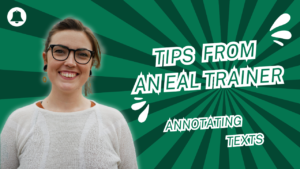
Find out how annotation helps learners engage with language and tackle challenging texts.

For multilingual families supporting reading at home can come with additional challenges including language barriers, limited access to resources or different reading expectations. Karen Warwick discusses the challenges they face, and how schools can build a stronger and inclusive partnership to encourage parents to read with children at home.
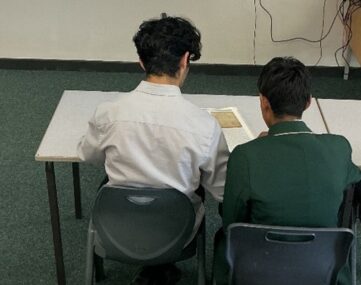
For our next Practitioner Voices blog series, we hear from Alexandra Slater, EAL and Inclusion Manager at Meadow Park School and Marilena Richards, Advisory Teacher from Ethnic Minority Achievement Service (EMAS), Coventry City Council, about their new paired reading intervention to strengthen the literacy skills and confidence of EAL learners.

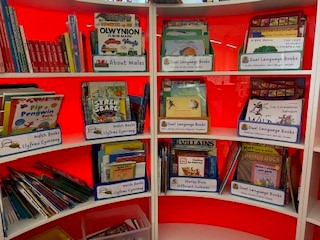
The following guidance mainly refers to primary settings. However, there are some elements that can be applied to secondary settings.
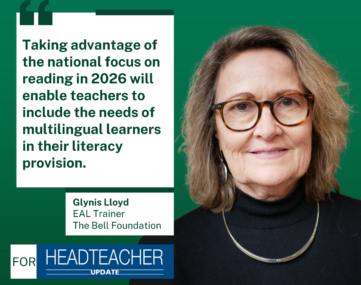
In our latest piece for Headteacher Update, EAL expert and trainer Glynis Lloyd shares practical classroom strategies to strengthen reading for EAL learners – including explicit vocabulary teaching, structured talk to support comprehension, and recognising home languages as assets for learning.

Marking International Mother Language Day, The Bell Foundation highlights how embracing students' Home, Heritage, and Community languages boosts belonging, confidence, and attainment while offering practical ways schools can support multilingual learners.

This article explores the CLIL approach to teaching language and curricular content in a multilingual school context.

This article explores how Reception teachers can better support the growing numbers of children with English as an additional language (EAL).

In this blog, our EAL trainer, Glynis Lloyd, offers ideas including nine practical strategies for how teachers can engage with the families of multilingual students and help them to support their children’s education and development.

In this video blog, Zuzanna Zajaczkowska from St Mary’s Catholic Primary School shares five simple, effective classroom strategies for teachers, EAL coordinators, TAs and school leaders who are working with pupils who use English as an Additional Language (EAL).

In this blog, trainer and subject expert, Tom Beakes, takes a look at how translanguaging leverages students’ home languages, dialects, and English to enhance learning in multilingual classrooms.