Can you set the scene and tell us about the area that you work in?
As the 8th largest county in England, Suffolk sees large pockets of deprivation sitting alongside significant wealth, with a lot of people dealing with issues around the security of their accommodation and their living environment, amongst other things. When we set up Suffolk Law Centre in 2018, there had been no Housing Legal Aid in the whole of Suffolk since 2014, so one of our main goals was to address this large unmet need. Since then, Suffolk Law Centre has been the only provider of Housing Legal Aid in the county and while we cannot help everyone, we are making a huge difference.
What are the aims of your project?
Suffolk is home to one of the largest Roma populations in the country. As a rural county, we see a lot of people who come to do seasonal agricultural work, but typically free services like ours don’t reach them and so we soon realised that we needed to make our offer more accessible to them. This aim closely aligns with Suffolk Law Centre’s legacy of providing discrimination legal advice for those in local marginalised communities who are experiencing prejudice.
What systemic barriers do Roma community members face in the local justice system?
We are finding that school absence fines are a big one. Many schools don’t take the time to find out the real reasons why a child hasn't been able to attend school, or to appreciate that many Roma parents are not literate, cannot read the letters they are being sent, and so applying more fines becomes a blunt discriminatory tool: families are not able to pay the first one and so they then get another one.
Back in 2020, we became aware that many of the Roma families who had settled in Suffolk were unaware that they had to register their children on the EUSS scheme. What’s more, we were concerned that many Roma had been taken advantage of by being charged ridiculous amounts of money for EUSS registrations, when it should have been free. We stepped in to set up a free clinic at the school to provide legal advice and help those families register their children. While helpful, this intervention still wasn’t enough to gain the trust of the Roma community to start coming to us with any other issues they might have.
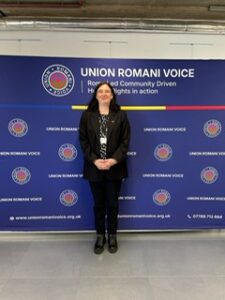
So, under this project funded by the Bell Foundation, we have partnered with local charity Union Romani Voice (URV), a Roma-led organisation. We now run a weekly clinic in their offices, supported by their small team of brilliant Roma Community Advocates. This has meant we are now helping Roma people who come to us with a wide range of legal issues, and that we are beginning to gain their trust. We couldn’t do it without the vital support that URV provides.
What have been the main outcomes of the project so far?
At the moment it’s all about the small wins. After a few months of running the clinic, our brilliant casework team, Julie and Tharika, are starting to have more of an impact on the Roma community by making legal advice more accessible to them. There have been several positive outcomes: taking school fines as an example, we have been able to either get a few schools to actually drop the fines or to re-evaluate the fines for the families that we’ve worked with.
A lot of work we do in collaboration with URV is about unpicking clustered issues and finding ways to resolve them. And resolutions are often about the power of joint-working and good community partnerships. Recently, working together with another organisation, we were able to challenge and overturn a Department for Work and Pensions (DWP) decision to stop PIP payments to a disabled young Roma woman, and prevent them from trying to recoup almost £50k of benefits paid to her. Her right to PIP has been fully reinstated.
How has the partnership developed?
We are now thinking about how to build the resilience of the project to extend it beyond the lifetime of this grant. We’re also considering how we might address the issue that many Roma people who, like many other clients, are not always aware of their legal rights. Many come to seek advice too late in the process for us to be able to help them at all or to guarantee a positive outcome for them.
How are linguistic barriers preventing people from accessing your services?
The usual way to build trust with a client is through a conversation. However, when there's a language barrier – and there are a significant proportion of Roma who are either illiterate or have limited reading skills – we have to look at other ways to reach them and share educational resources with them. For example, we’re interested in ways we might connect with the young Roma students currently finishing their education so that we can support them when they look to move into employment.
What’s next?
We're aware that all this work is just the tip of the iceberg, and we are hoping to find ways to make our full range of services more accessible to the Roma community. We want to get to a point where they come to us directly for help. We'd love to be able to help address some of the other issues they have in accessing healthcare and maternity services, for example.
About this Partner