At The Bell Foundation we believe that multilingual children and adults are assets to society and that their contribution to their communities is invaluable.
Marking Refugee Week 2026 and its theme of courage, this page brings together various practical resources, insights, and strategies to support and inspire inclusive practice with pupils from a refugee or asylum-seeking background who use English as an Additional Language (EAL). Together, they highlight the courage it takes to begin again, and the courage of schools and colleges to create welcoming communities for these learners.
In conversation with Onjali Q Raúf
We spoke with Onjali Q. Raúf, author of The Boy at the Back of the Class. The book tells the story of a group of schoolchildren who befriend Ahmet, a newly arrived Syrian child who is new to English. Onjali shares the inspiration behind Ahmet’s story and the misconceptions she hopes to challenge.
“I wanted to reflect some of the ... misconceptions that society has around refugees: ‘they've come from this’ ... and ‘they're dangerous and dark’ ... No, that it's just an ordinary kid who's been through really extraordinary things... The main undoing of the misconceptions lies in getting Ahmet to tell his story in his own way and giving him the time as well.”
A Day of Welcome: Friday 12 June 2026
We are proud to be part of A Day of Welcome, an annual day of solidarity and learning in schools that aims to build a culture of welcome and understanding for people seeking sanctuary.
Celebrated by more than 820 schools in 2025, the initiative kickstarts Refugee Week by supporting teachers to develop refugee education through FREE live events, resources, and activities for pupils of all ages.

Registered schools will get access to:
- A Teachers’ Guide – A summary of this year’s offer for Day of Welcome 2026 and everything you will need to plan your Day of Welcome.
- The Courage Collection – A list of recommended books and media for schools, to build empathy for those forced to flee their homeland and seek sanctuary
- Teaching & learning resources – New lesson materials, guidance, and activities for EYFS-KS4/Progression Steps 1-4, including some from The Bell Foundation.
- Free live events – A collection of books, art, and stories that bring the voices and experiences of people with lived experience of seeking sanctuary into your classroom (for pupils 5-18 years old). Day of Welcome 2026 | VNET Education CIC
- Refugee Education support– The latest training and guidance on how best to support any pupils and families at your school who have experienced forced displacement.

In this blog, we outline some tips for supporting learners who speak English as an Additional Language (EAL) with their 15+ education choices.
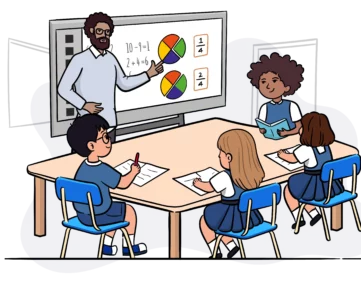
In this blog, Glynis Lloyd, provides a summary of a recent webinar which launched The Bell Foundation’s new guidance on building sustainable provision in schools for children who are refugees.

In this blog, our trainer and EAL expert Glynis Lloyd elaborates on the benefits of inclusive classrooms and considerations for withdrawal interventions.

How can schools support and welcome newly-arrived EAL learners?
Visit our dedicated page for resources to help you create an inclusive, supportive environment for learners who are new to English.
Celebrating excellence in ESOL provision: The Bell Foundation Beacon Award
As part of our Refugee Week 2026 celebrations, we are proud to showcase the outstanding work of further education providers working with those learning English as a second or additional language.
Through our partnership with the Association of Colleges’ Beacon Awards, The Bell Foundation Award for Excellence in ESOL 2025/26 recognised innovative and impactful approaches that are supporting English language development, inclusion, and both academic and personal success for learners from refugee and migrant backgrounds.
“Many learners come to us with very little confidence. However, as they develop their English skills, they gain that confidence and realise just how much more they have to give.”
Saima Ali, Programme Tutor ESOL, Oldham College

Based in one of the most multicultural cities in the country, the ESOL department of the City of Liverpool College has over 1900 ESOL learners from 50 different nationalities. Their innovative provision supports ESOL learners through integrated vocational pathways – combining English language development with sector-specific study to unlock real progression opportunities.
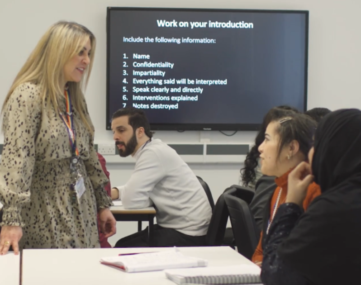
The ESOL provision at Oldham College was shortlisted in recognition of its Community Interpreting course. Learners take a vocational pathway from Level 1 to 3 that enables them to become qualified interpreters, directly addressing the UK’s shortage of trained professionals and guaranteeing them work with local employers upon completion.
New Resources for schools
To help educators celebrate Refugee Week and support learners from refugee backgrounds, we have prepared the following free educational resources:
How does it feel to suddenly leave all that you know and travel far away to a new place with a new language and different ways to do things? Find out in this new interactive and visual resource pack that follows the story of a mother and her two children who experience this.
This resource for English in KS2 supports learners using EAL to develop their reading fluency, to strengthen their oral skills and to learn the key vocabulary of literature study.
This new resource includes strategies teachers might use to enable EAL learners to move towards integrating socially and forming friendships in the classroom.
Early literacy word work refers to learning activities which focus on individual words or short phrases, and which are designed to support learners to read and write for the first time.